


How to Maximize Spin Potential in Tennis
Juan
Spin is created when your strings grip, slide, and snap back against the ball during contact. This interaction lets you hit harder while keeping the ball in the court.
ReString Zero and ReString Slap are engineered specifically to maximize this interaction, combining integrated snapback technology and aggressive ball bite for sustained spin production.
Your string choice does the heavy lifting when it comes to generating spin, but your setup and technique play a role too.
Tension, gauge, and string pattern all influence how much spin your stringbed can produce, and your swing path determines how much of that potential you actually use.
Two String Factors That Create Spin
Snapback
Snapback is the single biggest factor to look for in modern spin strings. It describes how freely your main strings slide and return to position after contact.
When you hit the ball, your main strings move sideways. As the ball leaves the stringbed, those displaced strings snap back into place. This sliding motion stores and releases energy, adding rotation beyond what the initial ball contact alone produces.
Snapback quality comes down to friction between your mains and crosses.
The lower the friction, the more easily your strings can slide and snap back into place. String coatings are what reduce this friction, but not all coatings are equal.
Most polyester strings rely on surface coatings applied to the string's exterior. These typically use materials like silicone oil, Teflon, or similar lubricants.
When the strings are fresh, the coating works well. Your mains slide smoothly and snap back quickly. But as you play, string-on-string friction gradually wears the coating away, exposing the base polyester underneath.
ReString's Signature Snapback Coating takes a different approach. Instead of sitting on the surface, the friction-reducing coating is integrated throughout the string construction itself.
As the outer layer wears, the snapback characteristics underneath continue working the same way, delivering sustained slipperiness from first hit to last. This integrated approach also reduces notching at crossing points, helping the stringbed play better for longer.
ReString Zero, ReString Slap, and ReString Sync all carry this Signature Snapback Coating.
Bite
Bite is how aggressively the strings grip the ball's felt at impact to create spin.
Shaped polyester strings with geometric edges dig into the ball's surface, producing more friction than round strings. A hexagonal cross-section, for example, creates multiple contact points with the felt, increasing grip and rotation on every stroke.
ReString Zero, ReString Slap, and ReString Vivo all use a six-sided profile engineered for aggressive ball bite and spin generation.
Understanding how bite and snapback work together is important.
Shape alone without slipperiness is limited because the edges that create grip also increase friction between strings. Slippery strings without shape rely purely on snapback for spin.
Strings that deliver both, like ReString Zero and ReString Slap, produce the highest spin potential.
Three Setup Factors That Influence Spin
String Tension
Lower tensions give strings more room to move, increasing dwell time and snapback since the strings can physically move further before snapping back into place.
That said, going too low can sacrifice control and predictability. Tension is best dialed in through gradual experimentation. Adjust 2 lbs at a time and play a few sessions before adjusting further.
String Gauge
Thinner strings can dig into the ball more easily, improving bite, and they often increase snapback due to their greater elasticity. Both of these factors contribute to higher spin potential.
The trade-off is durability. A thinner gauge like 18G offers more spin potential but breaks sooner under heavy use than a 16G. If you’re a frequent string breaker, experiment and consider where the sweet spot is for you.
String Pattern
Although you won't be changing your racket too often, it's worth knowing how string pattern affects spin potential.
Open patterns like 16x19 space strings further apart, allowing greater string movement and more snapback. The wider gaps give your mains room to displace and snap back during contact.
Dense patterns like 18x20 restrict string movement but offer tighter directional control. The closer spacing limits how far strings can travel, reducing potential spin.
Technique Fundamentals for More Spin
Your equipment sets the spin ceiling, but technique determines how much of that ceiling you actually reach.
A steep low-to-high swing path is the most important technical factor for generating topspin. Your racket head must start below the ball and finish high. The steeper the upward brush, the more rotation your strings can create.
Contact point matters too. Hit the ball in front of your body so you have room to swing up through impact. Late contact cuts off the upward path and flattens the shot.
Grip choice affects your natural spin access. A semi-western grip offers a strong balance of spin and control, which is why it’s the most common grip on the ATP and WTA tours. A full western grip maximizes topspin potential but sacrifices some versatility, which is why it’s less common.
Whatever grip you choose, keep your grip pressure relaxed and tighten only at impact. A loose hand lets the racket head accelerate naturally. A tight grip slows it down.
Finally, use your legs. The upward push from your legs feeds directly into the swing path, helping you generate heavy, dipping topspin without forcing it with your arm alone.
Best ReString Strings for Spin
ReString Zero
ReString Zero is rated 10/10 for spin on the ReString scorecard.
It is the most explosive, spin-focused string in the lineup, built for players who want the most aggressive ball shape and RPMs. Its hexagonal profile delivers aggressive bite while the Signature Snapback Coating maintains slippery string movement throughout the string's life.
The response is lively with easy pace, making it ideal for players who win with height, shape, and heavy ball. If you take big cuts and want your shots to jump and dip with maximum rotation, Zero is built for that.
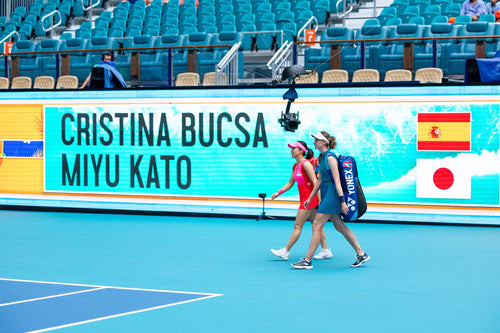
ReString Zero is proven at all levels, including the pro tour. For example, WTA player Cristina Bucsa uses it as a cross string in her hybrid setup.
ReString Slap
ReString Slap is also rated 10/10 for spin, sharing Zero's hexagonal shape and Signature Snapback Coating.
Where Slap differs is in its added control and forgiveness. It delivers the same spin ceiling as Zero but with a slightly more composed feel, sitting between Zero and Sync but closer to Zero.
This makes it the best option for players who want Zero-like spin with a bit more directional control and a simpler, full-bed setup.
To understand the differences between Zero and Slap in more detail, read our full guide on ReString Zero vs ReString Slap.
Conclusion
Maximizing spin potential comes down to a chain of factors working together.
Your technique creates the opportunity for spin. Snapback and bite convert that opportunity into RPM. And tension, gauge, and string pattern set the ceiling for how much spin your setup can produce.
The best approach is to start with a string that delivers both snapback and bite, then fine-tune your tension and gauge through experimentation until you find the right balance between spin and control.
For players looking to maximize spin potential, ReString Zero and ReString Slap are our top string recommendations.
Both are rated 10/10 for spin, built with a hexagonal shape and integrated Signature Snapback Coating that keeps your spin production consistent from first hit to last.
About the Author: Juan is the co-founder of ReString. He was born in Argentina, raised in Japan, and moved to the US to pursue college tennis. He now plays as an ATP & WTA hitting partner.
Related Posts
-

Why Is the Sunshine Double So Hard to Win?
-

How Your Tennis Strings Affect Dwell Time
-
How to Choose the Best Sustainable Tennis Strings
-
How to Hybrid Your Tennis Strings
-
Differences Between Tennis String Notching and Fraying
-
Should You Use Different Gauges in a Hybrid Setup?
-

What Are Dead Strings in Tennis?
-
Tips for Playing Tennis in the Cold Winter
-
How To Avoid Tennis String Notching
-
Types of Tennis Strings Explained
-

What Happens to Old Tennis Strings?
-
Categories of Pro Tennis Events Explained
-

The Evolution of Tennis Fashion
-

How Often Should You Restring a Tennis Racket?
-

How To Strategically Serve in Tennis
-

The Historical Evolution of Tennis Rackets
-

NCAA College Tennis Season Explained
-
The Rise of US College Tennis
-
The Historical Evolution of Tennis Strings
-

Natural Gut vs Synthetic Gut Tennis Strings
-
ATP and WTA Pro Tour Calendars Explained
-

Tenniscore Aesthetic: 13 Brands You Need to Know
-

Are Natural Gut Strings Worth The Price?
-
Should You Use a Vibration Dampener?


